


With more overlanding accessories available than ever before, it’s tempting to buy everything. But successful vehicle builds require careful planning around three critical factors: payload capacity, cargo space, and budget. Here’s how to look beyond the marketing and outfit your vehicle for actual adventures, not just the driveway.
In past decades outfitting a vehicle was often time consuming and difficult simply because there were not many options, and those that did exist were cost prohibitive and hard to come by, sometimes even requiring import from Australia or South Africa. Things have changed a lot in recent years.
With the rapid rise in popularity of Overlanding, more accessories and vehicle upgrades are on the market than ever before. It’s easy to buy an entire catalog of stuff for our vehicles, bringing rise to the popular meme about “Overloading”.
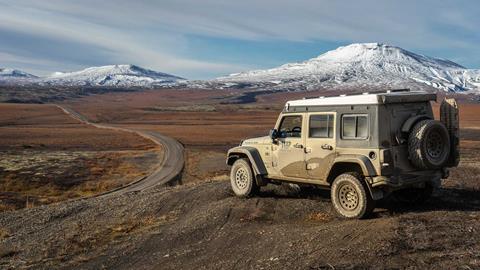
When it comes to outfitting an overland it is important to think about the priorities, and what features are most important when comparing various options. While the marketing of each product wants us to focus on a particular aspect, they often neglect to mention those that matter most to us as overlanders.
While it is all well and good to daydream about a bottomless bank account while living out of a massive LMTV or Unimog, it is important to live in the real world if we want to make our dreams of adventures turn into reality.
Building a functional and reliable overland that is both enjoyable to live out of and performs well off road requires careful planning and execution, not simply buying the entire catalog.
A Question Of Space & Weight
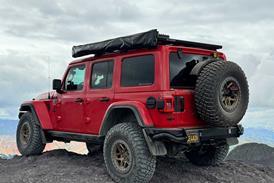
Vehicle platforms like the Wrangler, Tacoma, 4Runner and Ranger are very popular across North America. They have proven themselves for decades, and are very good at tackling a huge range of conditions no matter the season.
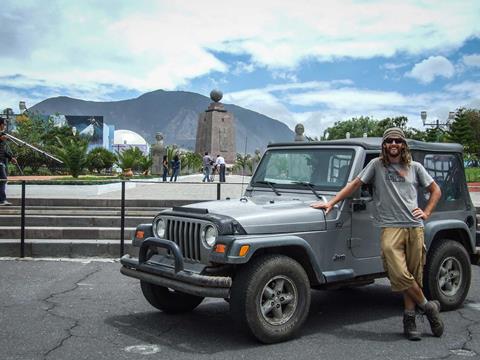
While these vehicles are very good at what they do, one thing they all lack is space. These are not large vehicles, and when packing for anything longer than a weekend, cargo space very quickly becomes the limiting factor.
Precious cargo space is quickly consumed by each addition to a vehicle, leaving very little left over for food, water, clothes and people to cram inside. When considering any accessory it is extremely important to think about the genuine need you are trying to solve, and if a smaller version of a given accessory will get the job done, leaving more cargo space for other items.
While the world-famous 70 series Land Cruiser can be upgraded to have a legal GVWR of 9,000lbs, it is a sad reality that the most popular North American vehicles have very limited payloads, often barely enough for four adults with a small day bag each - never mind a fridge or food or any camping or cooking gear.
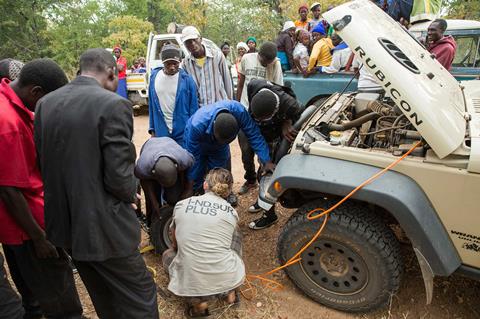
With such a small weight budget to work with, overlanders in north america must be hyper conscious of the weight of every addition to their vehicles. This careful planning can really pay off when considering on accessory that is deemed essential for a successful and enjoyable trip (think spare tire or fridge) and there are a range of options to choose from.
Look Behind The Marketing
I am a huge advocate of air compressors, and I consider them an essential piece of kit for roaming remote areas on four wheels. There are many great brands and options on the market, though strangely every review and promotion I have ever seen focuses solely on how quickly each compressor can air up a certain size tire.
While I’m sure many day trippers want to air up as fast as possible, speed alone should not be the sole basis for comparison for two major reasons.
Firstly, it assumes airing up faster is always better at any cost, and that we are always in a rush to get the job done. This is in stark contrast to my own experiences driving around the world where it makes very little difference if airing up takes ten, fifteen or even twenty minutes.
Irrelevant of the time taken, I always park in the shade and drink cold water while I wait. On a major journey the difference of five or ten minutes is insignificant.
Secondly, focusing only on speed completely ignores the size and weight of any given compressor, which are clearly the two most critical factors that should be considered.
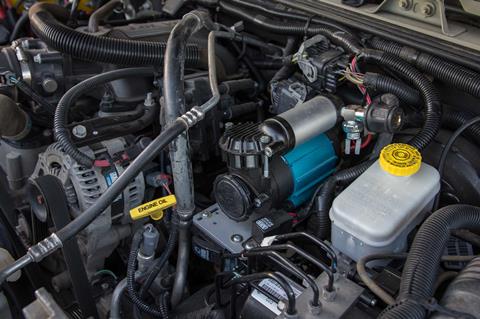
If it existed, I would be very happy to buy a compressor that takes twice as long, but is only half the size and weight. I’m certain that additional cargo space and payload breathing room will come in handy.
This thinking does not only apply to air compressors and fridges, in fact the same is true for a whole range of overlanding accessories where all the marketing focuses on just one metric and hides the all-important size and weight comparison.
Next time you look to buy an air compressor, fridge, battery, stove, driving lights, kitchen setup - in fact anything you will be adding to your vehicle, make certain you look beyond the marketing headline and pay careful attention to not only the physical dimensions, but also the weight.
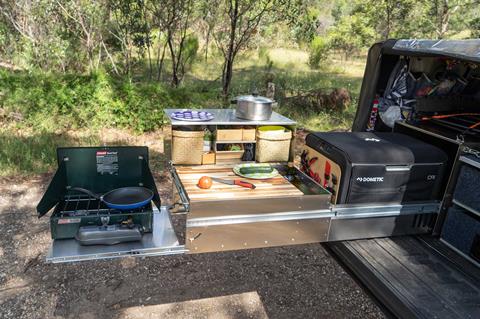
Compare the product you are looking at with the competition, and think long and hard about what you genuinely need before finding the smallest and lightest product that will get that job done.
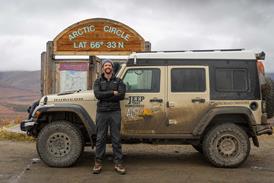
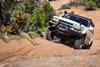
To explore all of Australia my Gladiator was equipped with ARB’s small and light single air compressor, a sole 50Ah Lithium battery, a 55-liter fridge and a single 100W solar panel. Each of those are right on the small end to meet my needs, and they did exactly that.
Each item performed flawlessly while keeping the Gladiator within its legal GVWR, which is essentially unheard of for a Jeep built to take two to three people to the most remote regions of the planet for weeks at a time.
The Buck Stops Here
If size and weight are the limiting factors when it comes to making an overland build function, then cost is the limiting factor when it comes to making an overland build exist.
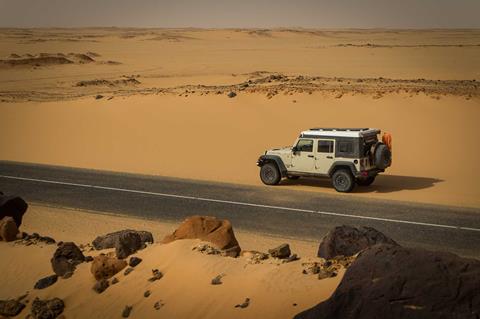
If we go overboard and spend too much chasing the “ultimate” build, there won’t be enough left over to put gas in the tank. I’m a firm believer that the whole point of a well-equipped overland vehicle is to actually go on adventures, so I am always very conscious of the bottom line.
While the ARB dual compressor would have aired up my tires faster, a 70-liter fridge would have meant more cold beverages and a bigger battery would have meant more luxuries in camp like a coffee maker or blender, they are all more expensive, and would have eaten up the gas budget to explore all of Australia - quite significant when the expedition spans more than thirty-six thousand miles and gas averaged $5USD a gallon.
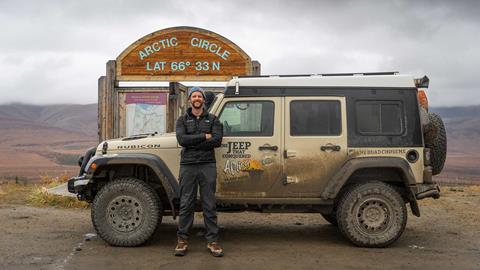
When gearing up to drive the length of the Pan-American Highway I dreamed of upgraded tires, a winch, front bumper, off road lights, roof rack, fridge and so much more.
While it would have been a lot of fun to add all of that to my little Jeep, I simply didn’t have enough money to buy it all while leaving enough left over for gas to drive to the southern tip of South America.
When push came to shove, I didn’t actually need any of that stuff, so I didn’t buy it. I chose to hit the road in a stock vehicle rather than have the ultimate build sitting in my driveway while I went to work to pay for it all.
We’re all limited by budget, so I strongly recommend you think long and hard about which one you would rather have - adventure or the ultimate vehicle - and make sure your outfitting choices match that desire.
Not Just the Small Stuff
While it might be obvious to apply this thinking to items like air compressors and refrigerators, it extends to every aspect of your vehicle build.
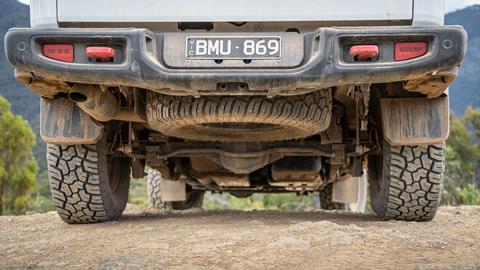
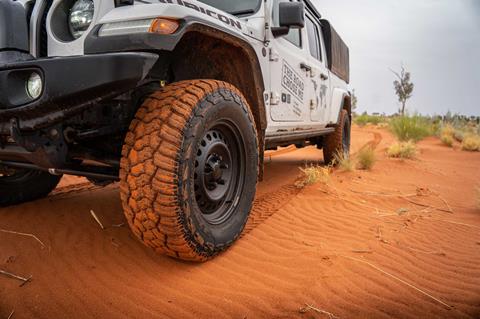
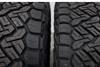
There is no doubt upgrading from factory 32-inch tires to aggressive 35-inch rubber will increase ground clearance and make your ride look cool, but those new tires alone will eat up more than 150lbs of payload. Going up to 37s takes out more than 180lbs in rubber alone, not counting wheel, axle and suspension upgrades.
For the most common vehicle platforms in North America that represents more than 20% of the entire vehicle payload, an enormous amount. When you’re on the road to Alaska or Baja, it makes a lot more sense to allocate that payload to reserve gas, food and camp essentials than to larger tires which are not strictly necessary.
Outfit Your Vehicle To Meet Your Needs
It’s easy to get caught up in the hype and get fixated on the latest piece of gear, obsessing over how advanced it is and great it looks. Next time you look at adding a piece of gear or equipment to your vehicle, think about what you genuinely need.
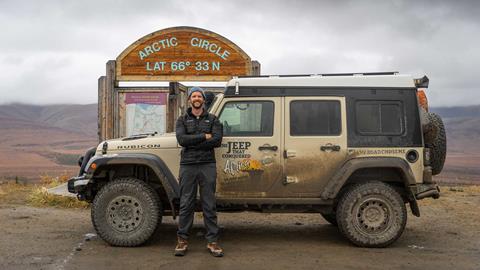
Compare various options using your own criteria, not just those set forward in the marketing materials. Chances are you will find that saving weight, cargo space and dollars is worth the tradeoff.
Applying this thinking to every aspect of your vehicle will ensure the build stays within legal GVWR and you have money left over for gas in the tank. When it comes to vehicle modifications, bigger is rarely better.
Join adventurer Dan Grec on his expeditions around the world on YouTube and Instagram @TheRoadChoseMe
Access More Great Stories!
This article originally appeared in OVR Issue 11. For more informative articles like this, consider subscribing to OVR Magazine in print or digital versions here. You can also find the print edition of OVR at your local newsstand by using our Magazine Finder.

No comments yet