












The OVR G63 build took a deliberate step backward — swapping the factory mirror assembly for exposed-arm Professional-style units that look more at home on a work truck than an AMG. The budget conversion delivered the classic G-Wagen aesthetic we were after, along with a few hard lessons about what you actually get when you skip the genuine Mercedes hardware.
Tractor Vision: Trading Modern Mirror Tech for a Classic G-Wagen Look
Most vehicle upgrades are supposed to add capability, convenience or technology. This Mercedes-AMG G63 mirror upgrade removed all three.

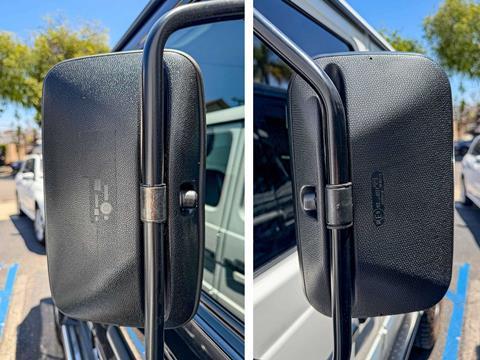
In place of the feature-packed factory mirrors on our 2017 G63, we installed a pair of simple rectangular Professional-style mirrors supported by exposed metal bars. They look more at home on a military vehicle, work truck or tractor than on a modern AMG.
That was precisely the point. We have always liked the utilitarian appearance of the mirrors found on work-oriented versions of the G-Class.
They give the otherwise modern G63 a direct visual connection to the commercial and military vehicles that established the G-Wagen’s reputation.
As we continue turning the OVR G63 into a trail-capable overlander, that classic styling cue became difficult to resist.

The conversion required a real sacrifice. Our factory mirrors included integrated turn signals, blind-spot warning indicators, power adjustment, power folding and heating for clearing fog or frost.
The replacements offer none of those things. They are mirrors in the most basic sense: glass, plastic housings and metal supports, with adjustment performed by hand.
Trading all that technology for something resembling a tractor mirror sounds a little crazy. We bought a set anyway.
PUR, Professional and Backdate Mirrors
These exposed-arm mirrors are commonly called PUR, Professional or backdate mirrors, although those terms do not always identify the exact same assembly.

Their appearance comes from the working side of the G-Class family, where simple construction and serviceability mattered more than integrated electronics.
The name PUR became widely associated with this style following the introduction of the Mercedes-Benz G 280 CDI Edition 30.PUR in 2009. Built on the utility-oriented W461 platform for the G-Class’s 30th anniversary, the Edition 30.PUR paid tribute to the first-generation G-Model.
“Pur” is the German word for “pure,” which suited a vehicle equipped for off-road travel with hard-wearing interior materials, washable floors, footwell drains and available equipment such as a walk-on hood, protective lamp grilles and a two-piece rear door.
Mercedes later offered Professional versions of the G-Class that continued the work-focused theme. Their simple rectangular mirrors and exposed supports stood apart from the smoother, body-colored mirror assemblies fitted to luxury-oriented W463 models such as our G63.

On a W463, these Professional mirrors are also called backdate mirrors because they give the vehicle an older, more utilitarian appearance.
The terminology has become loose in the replacement-parts market. Genuine Mercedes assemblies, reproduction parts and several different mirror sizes are all advertised under the same names.
For our purposes, the most accurate description of the set we purchased is Professional-style mirrors. They imitate the factory utility design, but as we would soon learn, they are not genuine Mercedes-Benz parts.
Aftermarket vs. Genuine Mercedes Mirror Cost
Factory hardware can make this a surprisingly expensive cosmetic change. Depending on the components and source, genuine Mercedes mirror sets can cost upward of $1,000 or more.
At the time of our research, Jack Wagon Overlanding listed an electrically operated version for approximately $2,500—an awesome upgrade if you have the budget for it. Unfortunately, we did not.

Instead, we chose a budget aftermarket option. An eBay listing offered a complete pair of basic Professional-style mirrors for $420, a considerable savings over the other OEM choices we found. They looked right in the listing, but their price raised an obvious question: Were they any good?
There was only one way to find out. We ordered the mirrors and brought them, along with the G63, to the Mercedes-Benz specialists at Benztec in Signal Hill, California.
What the G63 Mirror Installation Involves
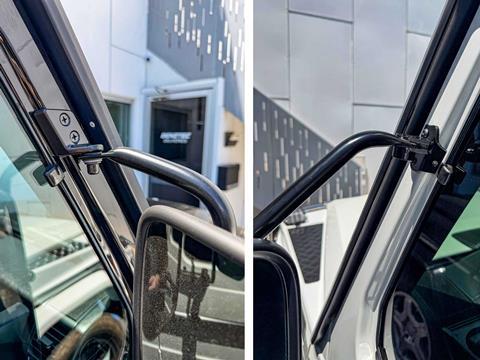
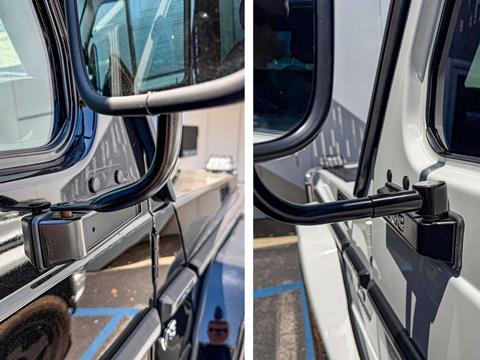
Before work began, the Benztec team explained exactly what the conversion would involve. The new mounting arrangement required holes to be drilled into the doors, while any unused factory mounting holes would be plugged.
If the thought of drilling additional holes into a G-Wagen door makes you uncomfortable, this modification is probably not for you.

We understood that the conversion would not retain the functions built into the original mirrors. Benztec would remove the factory assemblies, mount and align the replacements, and address any warning messages through programming if necessary. From that point forward, mirror adjustment would be handled manually.
We approved the work and left the G63 in their hands. Only a few minutes later, Benztec owner Michael Long called with a question.
“Where did you get these mirrors?”
We sheepishly admitted that they came from a Turkish seller on eBay. Mike’s response was slightly alarming: He had not seen this particular version before, and they were definitely not factory Mercedes parts.
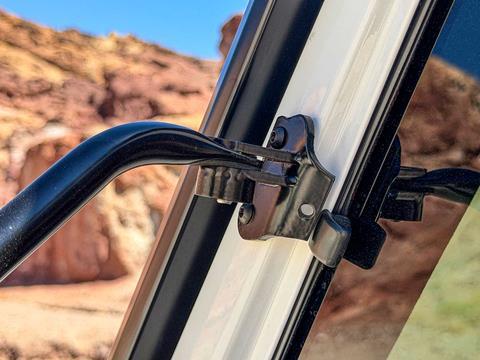
We had suspected as much given their price, but hearing it from someone who regularly works on G-Wagens confirmed that our bargain mirrors were going to require some problem-solving.
Mike was confident that Benztec could make them work, so the installation continued. Without the benefit of instructions, Mike and his team figured out how the mirrors mounted and performed the meticulous alignment work needed to complete the job.
A couple of days later, we returned to pick up the G63 and get the full report.
Fitment and Finish
According to Benztec, our aftermarket G-Wagen mirrors mounted differently from genuine Mercedes versions and took more effort to align properly.
Their construction was also less substantial than the factory hardware. That difference became especially apparent in the amount of movement present in the assemblies.
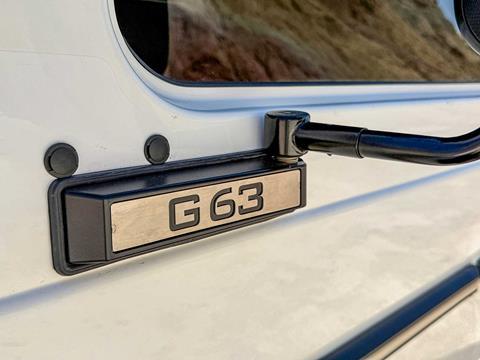
There was one unexpected detail that we liked. The seller included small customized plates marked “G63” that fit into the mirror bases. They give the otherwise generic reproduction pieces a vehicle-specific finishing touch and make the installation look more intentional.
Once installed, the mirrors delivered the visual change we wanted. Their exposed rounded supports and squared housings immediately pulled the G63’s appearance toward the classic, work-oriented side of the G-Class family.
They also complement the direction of the OVR build, which combines a comfortable daily driver with practical equipment for trails and travel.
OEM vs. Aftermarket: A Look at the Differences
Better Visibility, More Vibration
The improvement in visibility was apparent as soon as we drove away. The replacement glass is slightly convex, providing a wide view of the lanes, terrain and vehicles beside and behind the G63. The larger picture is particularly useful in a tall, wide vehicle with pronounced rear fenders. In terms of their basic job as rearview mirrors, they function well.

The drawback is vibration. At city speeds on smooth pavement, the movement is manageable. At highway speeds or while driving over a rough trail, both mirrors shake noticeably.
Tightening the mounting hardware, mirror bolts and support posts has not solved the problem. The vibration appears to come from the lighter construction and tolerances of the reproduction assemblies rather than anything left loose during installation.
The mirrors remain usable, but the image is less stable than it would be with genuine Mercedes hardware. This is where the difference in price becomes easier to understand. The budget set captures the shape and overall appearance, while the construction falls short of the factory version.
Was the G63 Mirror Conversion Worth It?
For us, yes. We gave up turn signals, blind-spot indicators, power folding, electric adjustment and heated glass for two manually adjusted mirrors that vibrate when the road gets rough. Written out that way, the decision does not sound particularly rational.

We still love what they do for the G63. The Professional-style mirrors give it a classic utilitarian look that suits the OVR project, and their wide field of view is genuinely useful.
Our budget experiment showed that budget G-Class backdate mirrors can work and look the part, provided the buyer accepts the compromises in construction and stability.
We may eventually replace them with genuine Mercedes-Benz mirrors. The sturdier factory assemblies should address the vibration and would be the better long-term solution.
For now, however, these are doing their job, and the money saved can go toward other upgrades on the build.

This Mercedes G63 mirror conversion will not appeal to most G-Wagen owners. Giving up useful modern features, drilling the doors and spending hundreds—or potentially thousands—of dollars to make an AMG look more like a work truck is a very specific choice.
When we do see another G wearing these exposed-arm mirrors, though, we give its owner a subtle nod of acknowledgment. They get it.

Mirror Installation by: Benztec
Access More Great Stories!
For more informative articles like this, consider subscribing to OVR Magazine in print or digital versions here. You can also find the print edition of OVR at your local newsstand by using our Magazine Finder.



No comments yet