


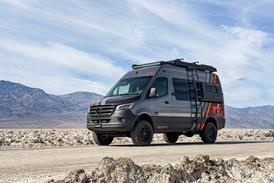


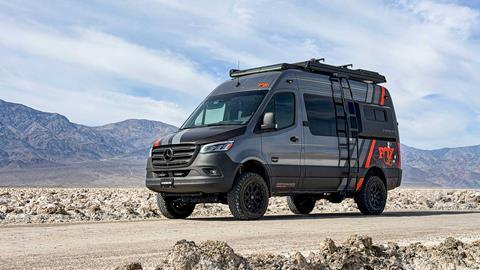
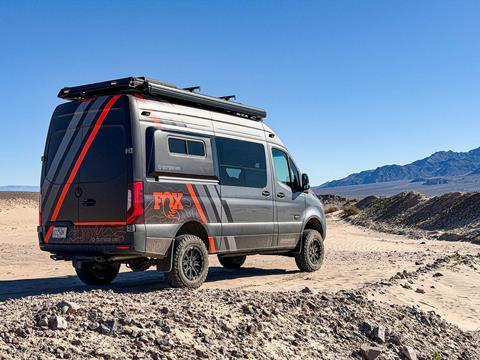
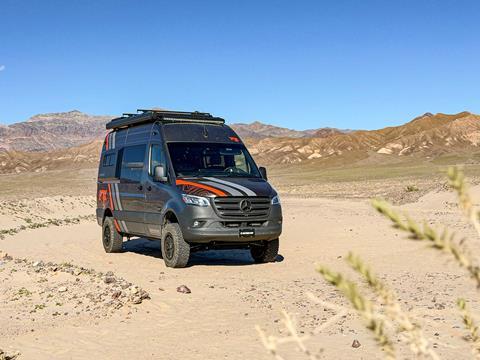
Outside Van loaned us their Overnight Sprinter van build for a full test cycle. What followed was 2,405 miles across California’s harshest environments—from Johnson Valley’s punishing whoops during King of the Hammers to Death Valley’s remote backcountry. Two trips, two perspectives, and one month of real-world use revealed what this 144” Mercedes-Benz Sprinter conversion can actually do.
Vanlife has been part of the broader overland conversation for years, but it’s one of those things that you don’t fully understand until you live it.
For us, that opportunity came when Outside Van loaned OVR their Overnight build for a full test cycle.
What followed wasn’t a quick weekend review, but nearly a month of use that spanned Los Angeles traffic, the chaos of King of the Hammers, and the isolation of Death Valley National Park.
By the time we handed the keys back, we had put 2,405 miles on the van. It arrived with just over 2,600 on the odometer and left with more than 5,100.
That’s enough seat time to understand not just what the Overnight is, but where it fits within the spectrum of vehicle-based adventure.
Testing the Outside Van Overnight: Two Trips, Two Perspectives
This wasn’t a one-driver evaluation. OVR Publisher Mark Han and I approached the Overnight from different angles, and that contrast helped shape a more complete picture.
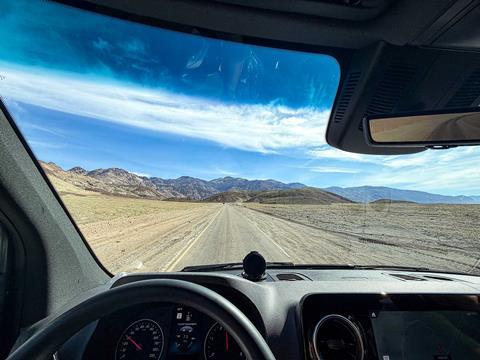
Mark took it into one of the harshest environments for both vehicles and people: Johnson Valley during King of the Hammers. I took it somewhere quieter, but no less demanding in its own way—Death Valley and its surrounding backcountry.
Those two trips highlight exactly why vans like this have gained traction. They can support very different types of travel without needing to be reconfigured or compromised.
Sprinter Van Off-Road Performance: King of the Hammers Testing
Johnson Valley isn’t subtle. It’s a mix of sand, rock, and endless whoops that punish vehicles not built for it. During King of the Hammers, it becomes a temporary city—tens of thousands of people gathering in the desert for one of the most demanding off-road races in the world.
Before heading out, Mark gave Outside Van a heads up: “Hey Justin, just so you know, we’ll take the van out to Johnson Valley during the King of the Hammers.
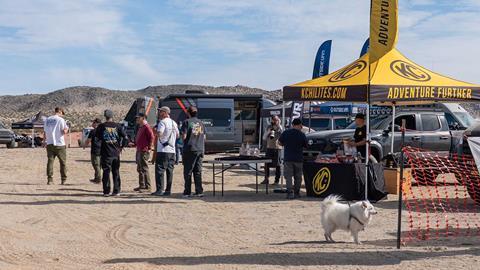
I’ll live in the van for a week in the desert and really test out the Agile/Fox shocks in the whoops and the sand. Are you cool with us really using it like that?”
The response was simple: It was built for it.
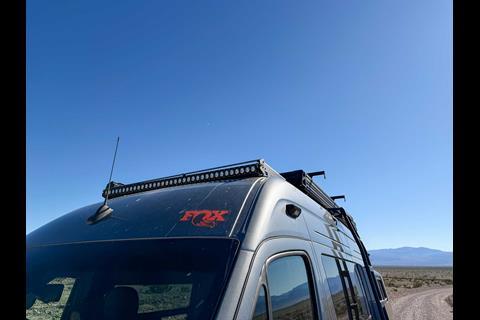
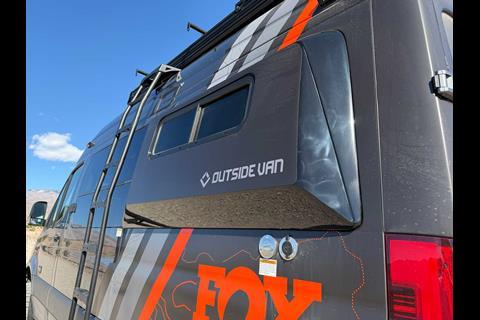
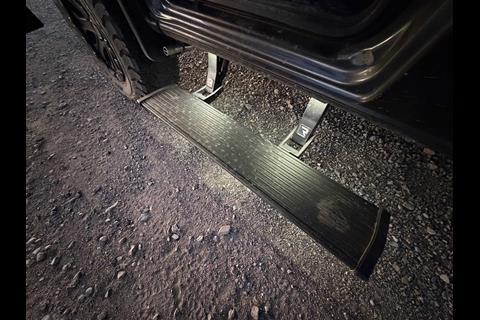
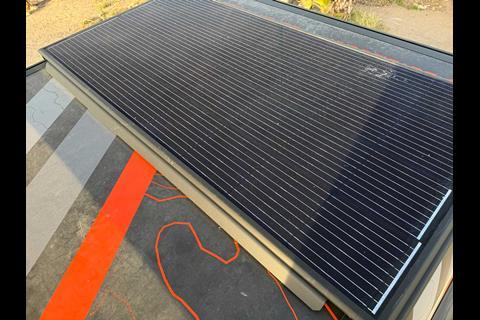
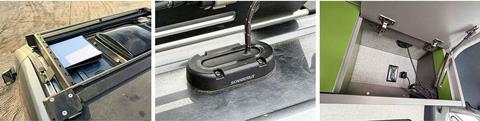
Outside Van Overnight Exterior Details Image Gallery
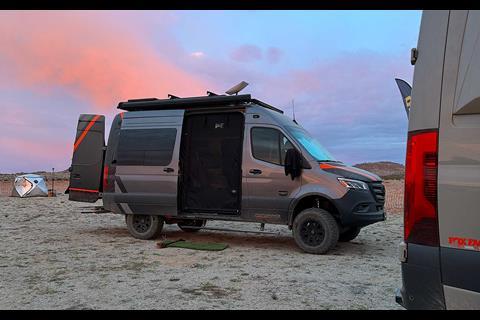
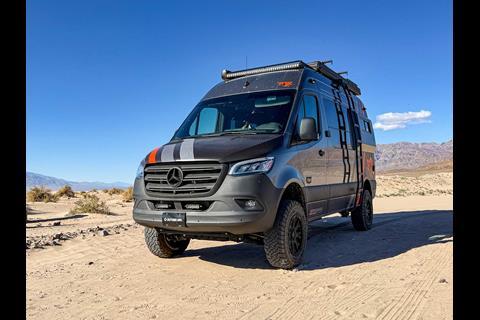
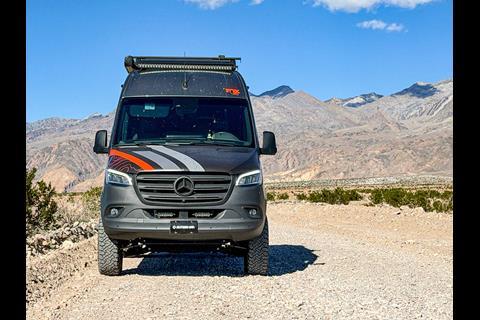
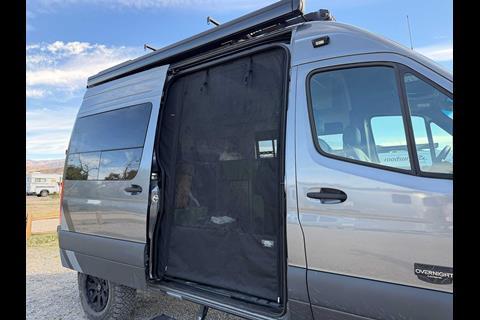
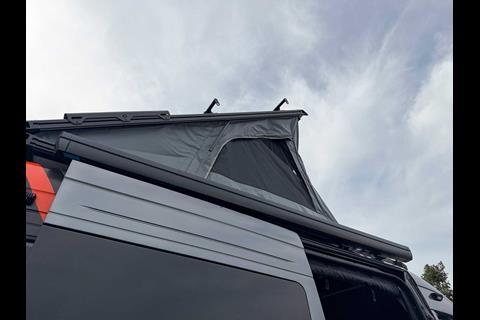
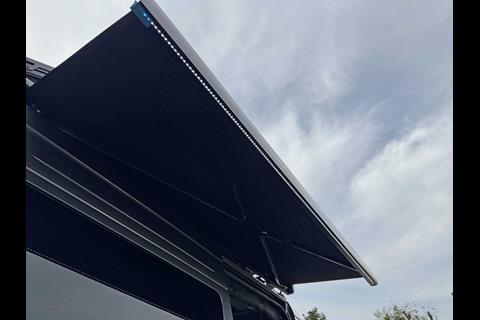
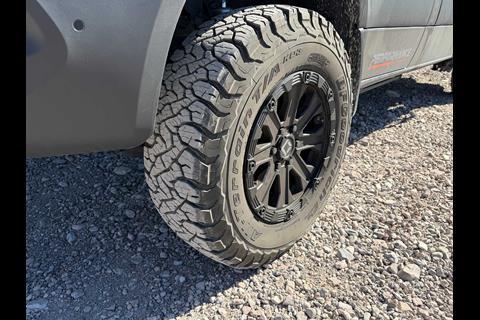
Off-Grid Van Life: Week-Long Desert Living Test
For a week, the Overnight served as both living space and operational hub for the OVR Outpost. That meant constant use—people in and out, gear loading and unloading, and long days in the desert environment.
The 620Ah lithium battery system held up well. Even with heavy use, it only dipped low once during the week, largely due to dust buildup on the roof-mounted solar panels. A short drive cleared the panels and recharged the system.
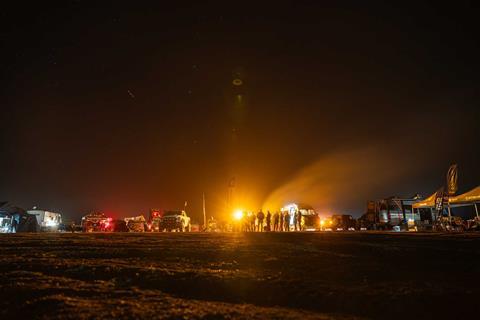
That kind of self-sufficiency matters in a place like Johnson Valley. You’re not just camping—you’re living in a temporary off-grid environment. And yes, having ice cream in the desert became one of those small luxuries that stood out.
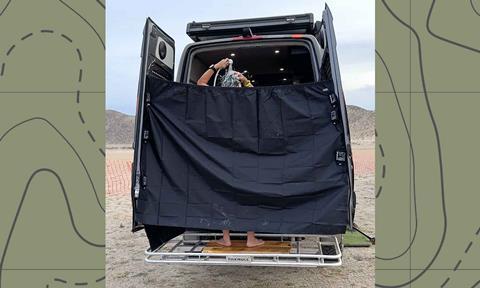
For those considering a van conversion for extended travel, the Overnight demonstrates how a well-executed Sprinter can rival traditional RVs in comfort while maintaining better off-road capability and maneuverability.
Sprinter Van Off-Road Capability: Fox Suspension & All-Wheel Drive Performance
This particular Overnight was equipped with the Fox Performance Elite suspension package from Agile Offroad, paired with their STS (Stop the Sway) system and upgraded rear leaf springs.
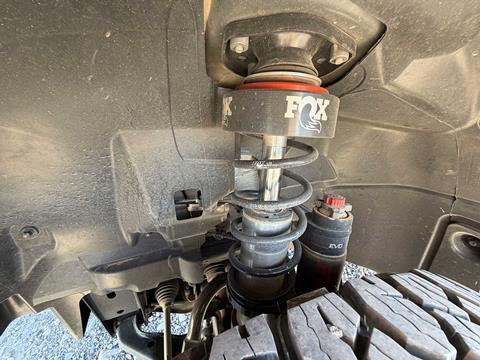
In the whoops and sand, the van stayed composed. The shocks absorbed repeated hits and recovered quickly enough to keep the chassis settled. For a vehicle of this size and height, that composure is noticeable.
On pavement, the steering tracked well and felt stable at speed. There were moments of chop on rough highway sections, but nothing that required adjustment.
Towing Capacity & Highway Fuel Economy: Real-World Sprinter Van Numbers
One of the more demanding parts of Mark’s trip was towing a full-size 2021 Ford Bronco from Southern California to Oregon, which was close to the Sprinter’s 5,000-pound towing limit.
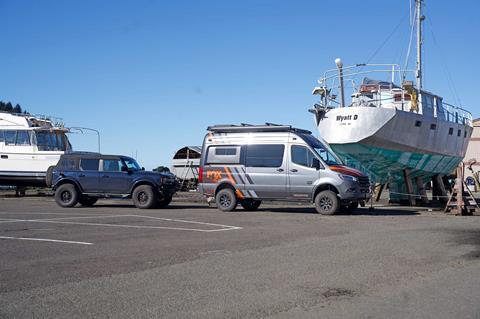
Sprinter van fuel economy across varied conditions broke down like this:
- Highway (unloaded): 19.31 MPG
- Johnson Valley off-road: 12.67 MPG
- Towing on I-5: 14.04 MPG
- Mountain grades near Grants Pass: 13.22 MPG
- Death Valley highway and dirt trail average: 16.3 MPG
Performance while towing was steady on flat ground, but climbs required patience. That’s expected when you’re at the upper end of the platform’s capability.
One important note from Mark: Disable the lane departure system when towing. The intervention can be abrupt and unpredictable in that context.
Outside Van Overnight Amenities: Off-Grid Systems That Deliver
After a full day in the dust and chaos, the ability to step into a controlled, comfortable space made a difference. The exterior shower setup, complete with magnetized privacy curtains, became a daily reset.
The tankless water heater delivered consistent hot water, and the rooftop tent provided additional sleeping space when needed.
Cooling during the day relied on ventilation and window covers. This 2025 model did not have the newer undermounted air-conditioning system that will be standard on 2026 builds, but the roof fan and airflow management kept the interior usable even in the desert heat.
Outside Van Overnight Interior Details Image Gallery
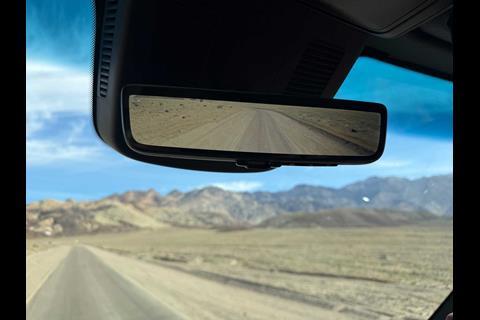
Death Valley Van Camping & Beyond
My experience with vehicle-based travel has mostly been through SUVs and trucks. Platforms like the Land Cruiser have always made sense to me. The Overnight was my first real exposure to vanlife.
I took it to Death Valley for a multi-day trip, exploring both the park and the surrounding areas. Compared to Johnson Valley the pace was slower, but the sense of isolation was stronger. Death Valley has a way of making you feel small.
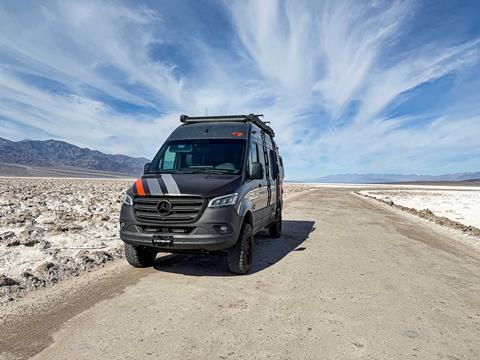
Vast open basins, salt flats, and long stretches without seeing another person. It’s the kind of place where self-sufficiency isn’t optional.
Inside the Outside Van Overnight: First Impressions and Livability
The first thing you notice is the height. The Overnight is based on a 144-inch wheelbase Sprinter, so its footprint isn’t dramatically larger than what we’re used to. But it’s tall—especially with the upgraded suspension.
That height translates into generous interior space, and that’s where the van starts to separate itself from other platforms.
Van Conversion Interior: Comfort and Functionality in Remote Locations
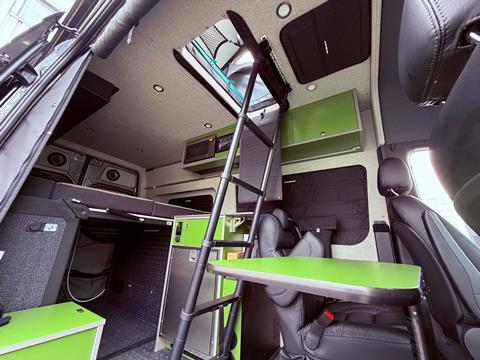
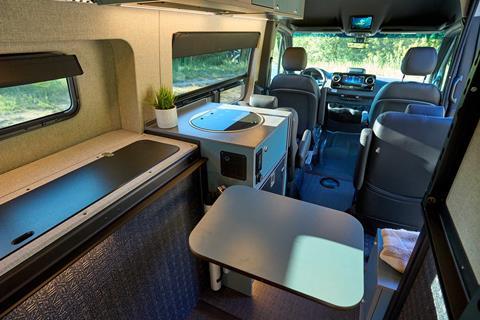
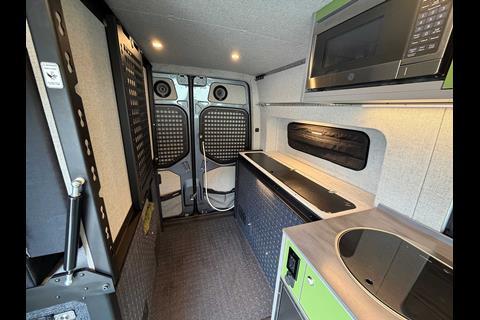
Inside, the Overnight feels closer to a compact studio than a traditional vehicle setup. There’s room to move, to sit, and to exist without constantly stepping outside.
Cold mornings in Death Valley are common, and having a heater made a difference. Being able to stay inside, make a full breakfast, and ease into the day without rushing outside changed the rhythm of the trip.
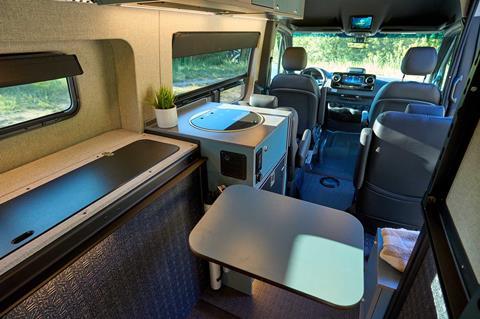
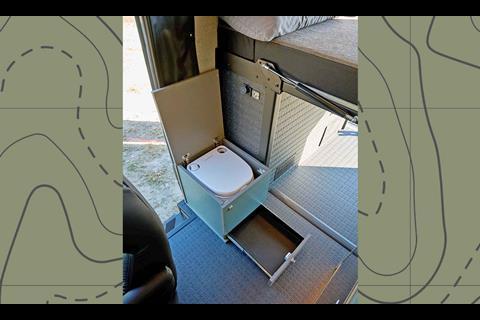
The built-in toilet, microwave, and refrigerator all contributed to that sense of independence. It’s not just about convenience—it’s about reducing the friction of daily tasks when you’re far from services.
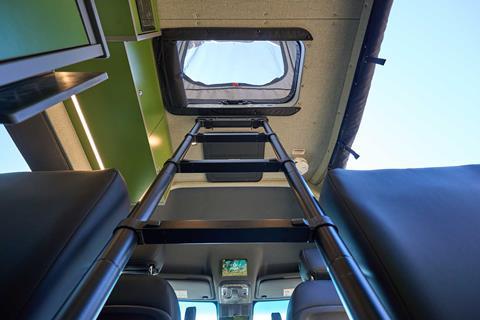
Sleeping options included a fold-away Murphy bed inside and a second sleeping area in the rooftop tent. I primarily used the interior bed, but having the option for additional sleeping space is useful when traveling with others.
Integrated Van Systems: Technology and Connectivity in the Overnight
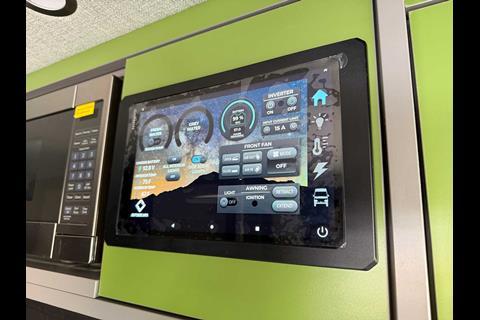
One of the Overnight’s more impressive aspects is how its systems are integrated. A central control screen, along with a removable tablet, allows you to manage most of the van’s functions from a single interface. Power distribution, lighting both inside and out, the water pump, heater, and even the powered awning can all be controlled and monitored at your fingertips.
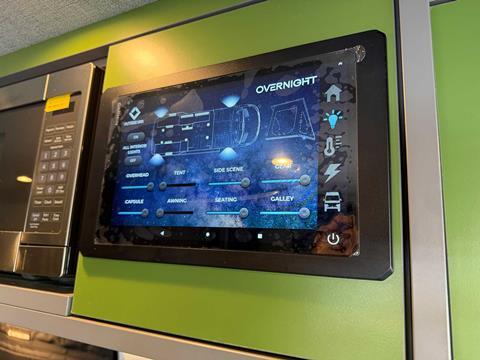
The system is intuitive to use and feels cohesive, with a level of refinement that aligns more closely with OEM integration than a collection of aftermarket components.
We also made use of the pre-drilled roof pass-through to run a magnet-mounted Starlink Mini on the van’s roof. In areas where signal was available, it added another layer of connectivity, even in remote parts of the park.
This level of system integration separates premium van conversions like the Outside Van Overnight from DIY Sprinter builds. The cohesive approach to power management, climate control, and connectivity creates a user experience closer to factory-builds.
Outside Van Overnight Review: 2,405 Miles of Real-World Use
Spending time in the Overnight highlighted a few consistent themes. The fit and finish stand out immediately. Materials, panel alignment, and overall execution feel cohesive.
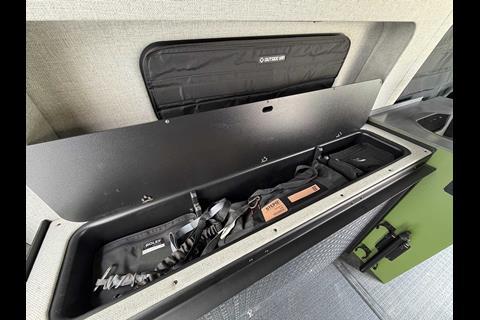
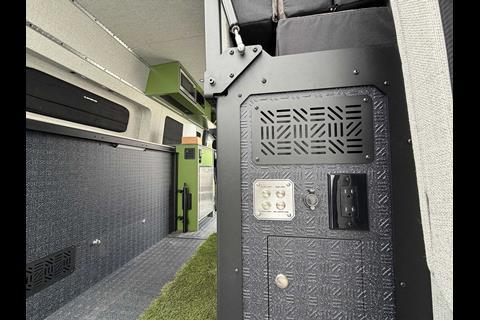
It doesn’t have the pieced-together look that some builds can have. Everything has a place, and the layout makes sense. Storage is accessible without being intrusive, and the living space remains usable even when fully loaded.
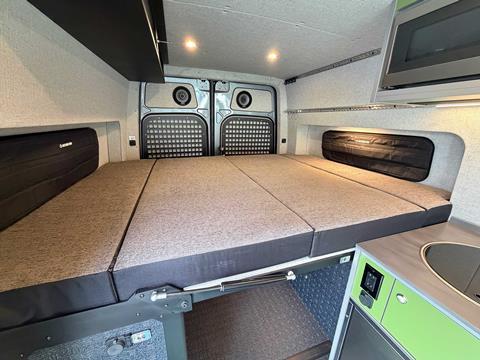
With a large lithium battery system and solar support, the van is capable of extended off-grid use. The addition of the 2026 undermounted air-conditioning should further expand its usability in hotter climates.
Sprinter Van Off-Road Capability & Limitations
The Overnight is more capable off-road than I expected. The diesel engine provides more than enough torque to move the van confidently across the terrain that we encountered.
That said, there are limits. The height and overall mass of the vehicle become factors on tighter or more technical trails. It’s also AWD rather than 4WD, which requires a different approach to route selection.
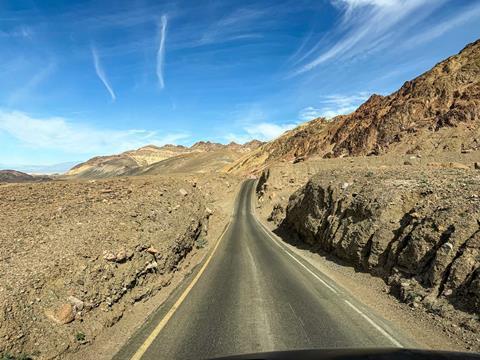
In Death Valley, that wasn’t a major issue. Many of the park’s roads are well-suited to a vehicle like this. But it’s something to consider depending on your intended use.
Outside Van Overnight Pricing: Cost Consideration
The 2026 Outside Overnight starts at $235,000, with the Performance Elite suspension package bringing it to $240,000. It’s a significant investment, but it’s also a fully integrated system that replaces multiple pieces of gear and infrastructure.
Outside Van also offers financing options, allowing buyers to spread the cost over longer terms—up to 20 years in some cases—which can make the Overnight more comparable to other large recreational vehicle purchases rather than a traditional vehicle loan. This approach can help offset the upfront cost, especially for buyers planning extended travel or full-time use.
Outside Van Overnight Review: Final Verdict After One Month of Testing
After living with the Overnight across two very different trips, I understand the appeal of vanlife in a way that I didn’t before. For Mark, it functioned as a mobile basecamp in one of the most demanding off-road environments in the country.
For me, it became a comfortable, self-contained platform for exploring one of the most remote national parks in the U.S. Coming from a Land Cruiser background, I felt the trade-offs.
The Overnight isn’t built for tight technical trails or extreme rock crawling. But that’s not its purpose.
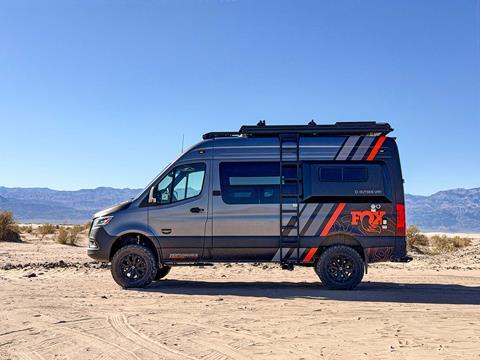
If your goal is long-distance travel, extended stays, and a higher level of comfort without giving up access to remote areas, the Overnight makes a strong case for itself.
It doesn’t replace traditional overland vehicles—it complements them by offering a different approach to the same idea: getting out there and staying out there longer.
Outside Van Overnight
MSRP: $235,000 (base 2026 Overnight) / $240,000 as tested with Performance Elite suspension
URL: outsidevan.com
| Vehicle Specs | Outside Van Overnight |
|---|---|
| Base Vehicle | Mercedes-Benz Sprinter (144-inch wheelbase) |
| Engine | 4-cylinder high-output turbodiesel (208 hp / 332 lb-ft) |
| Driveline | All-wheel drive (AWD) |
| Suspension | Agile Offroad STS system with upgraded rear leaf springs; Fox Performance Elite front coilovers and rear shocks |
| Wheels & Tires | All-terrain tire package (as tested with Performance Elite suspension) |
| Exterior Features | LED headlights; 180° rear doors; electrically folding mirrors; Pack Series rack with rear tire carrier; pre-drilled roof wire passthrough |
| Interior & Living | FoldAway Murphy bed with pop-top sleeping area (sleeps 4); overhead cabinetry; insulated window coverings; integrated bug screens; L-Track tie-down system |
| Kitchen & Utilities | Stainless sink and faucet; refrigerator; microwave; rear exterior shower with tankless hot water system |
| Water System | 20-gallon fresh tank; 22-gallon grey tank |
| Climate Control | Hydronic diesel heater (cabin air and water); roof-mounted Maxxair fan; 2026 models add undermount air-conditioning |
| Electrical System | 620Ah (7.44 kWh) lithium battery system; 3000W inverter/charger; 80A alternator charging; shore power connection |
| Lighting & Power Access | Interior LED lighting with dimmer; (6) USB outlets; (5) 120V outlets; (3) 12V plugs |
| Technology & Connectivity | Central control system with touchscreen and mobile tablet; Bluetooth and Wi-Fi system management; MBUX infotainment with 10.25-inch display; 360° camera system |
| Safety & Driver Assist | Active lane keeping, distance assist, blind spot monitoring; smoke alarm, CO detector, fire extinguisher |
| Seating & Capacity | DOT-approved seating for 4; sleeping for 4 |
| Air System | Onboard air compressor with three connection points and 1-gallon tank |
| Audio | Alpine upgraded sound system |
| Warranty | 5-year / 75,000-mile chassis; 1-year / 15,000-mile upfit |
FAQ: Overnighting in an Outside Van Across California’s Desert
What is “Outside Van” and what makes it unique?
Outside Van is a custom camper van builder known for high-end, fully integrated adventure vans designed for off-grid travel. These vans typically include solar power, water systems, storage solutions, and sleeping quarters, enabling extended trips without relying on campgrounds.
Why choose a Sprinter Van for desert travel instead of a traditional RV?
Sprinter vans offer several like Mobility: Easier to navigate tight or off-road terrain, Efficiency: Lower fuel consumption than larger RVs. They’re especially well-suited for remote desert exploration where flexibility is key.
How do you manage water and power on a month-long van trip?
Most expedition vans (like those from Outside Van) rely on Solar panels + battery systems for power, Freshwater tanks and conservation strategies, Portable or built-in filtration systems, and efficient usage is critical, especially in arid environments with no resupply points.
Is it legal to sleep in your van in California deserts?
Yes—in many areas, especially on BLM (Bureau of Land Management) land and National forests (with restrictions). However, rules vary by location. Travelers must follow local regulations like 14 days stay limits. Also, don’t forget the Leave No Trace principles.
What gear is essential for desert van life?
Preparation is crucial due to the remote and unforgiving nature of desert terrain. Key gear includes recovery equipment (traction boards, shovel), extra water storage, navigation tools (offline mapping like onX offroad, GPS), and shade solutions and ventilation systems.
How does van life change the travel experience?
Van life transforms travel by allowing complete freedom in itinerary, enabling deeper immersion in nature, and reducing reliance on traditional accommodations. It creates a self-contained, flexible lifestyle focused on exploration.
Is van life in the desert suitable for beginners?
It can be—but beginners should start with shorter trips, choose well-known areas with access to services, and learn basic vehicle recovery and safety skills. The desert is rewarding but not forgiving of poor preparation.
What is the appeal of Outside Van builds for overlanding?
Outside Van vehicles are designed for durability in various environments, have Integrated systems (power, water, storage), and customization for specific travel styles. They appeal to travelers seeking premium, expedition-ready capability.
Access More Great Stories!
This article originally appeared in OVR Issue 21. For more informative articles like this, consider subscribing to OVR Magazine in print or digital versions here. You can also find the print edition of OVR at your local newsstand by using our Magazine Finder.





No comments yet