



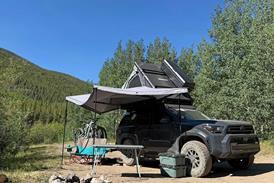

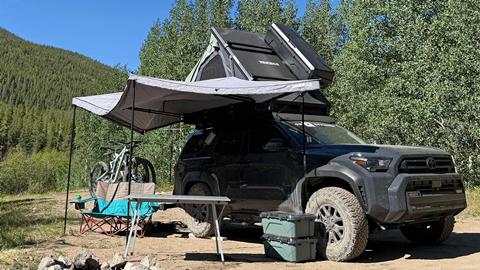
A rooftop tent, awning, cargo box, and swing-away bike rack all wearing the same badge sounds tidy on paper. We put a full Yakima overland system on a 4Runner and drove it until the gear had to prove its worth.
Why a Full Yakima Overland System Made Sense for This 4Runner Build
A full Yakima overland setup let me test whether staying inside one brand ecosystem made the 4Runner cleaner and easier to live out of.
Yakima has spent decades helping people carry the gear that gets them outside. Long before overlanding became its own category, the brand was already tied to vehicle racks and the familiar driveway shuffle before a trip.
Load the gear, check the straps, make sure everything has a place, and hope you don’t move the same stuff three more times before you leave.
That history gives this test some teeth. This wasn’t one accessory added to the 4Runner for a quick look. It was a full Yakima system living on one vehicle, and it had to do more than look tidy in the driveway.
Overland builds can get pieced together from every corner of the internet. Sometimes that works great.
Other times, good gear starts arguing over the same small stretch of vehicle. A bracket sits awkwardly. A box takes up more room than expected. A bike rack makes the rear hatch a pain.
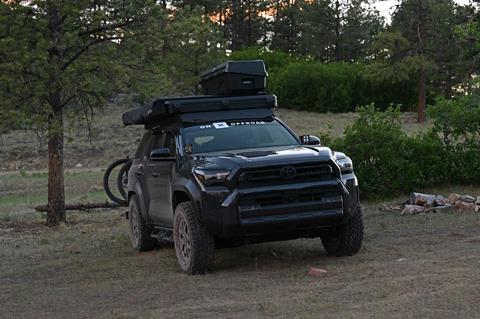
On paper, the full Yakima approach looked clean. The better question was what happened once the 4Runner was loaded, the bikes were on, and the gear had to earn its place on the road.
That’s what I wanted to sort out: whether a full Yakima setup stayed uniform and proved its worth as the miles added up.
The Complete Yakima Overland Setup: What Went on the 4Runner
I picked each piece for the role it would play on the 4Runner. The idea was pretty simple: see if one Yakima setup could handle the way I actually use the rig and still be, for lack of a better phrase, a functionally good time.
That meant sleeping out of the truck, carrying bikes, keeping extra gear out of the cabin, and making sure the whole thing still felt usable once everything was mounted. A clean build loses its charm fast if you have to fight it every time you stop.
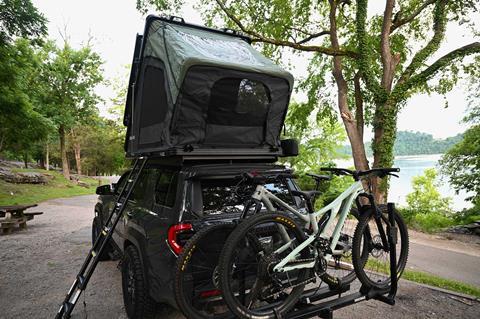
Here’s what went on the 4Runner:
-
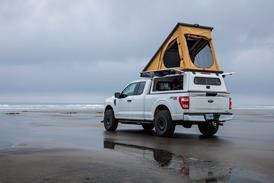
Yakima SkyPeak HD Rooftop Tent: Sleep setup for repeated nights on the road.
-
Yakima OverNOut 180 Awning: Shelter once the vehicle was parked.
-
Yakima DeepSpace 10 Cargo Box: Extra storage above the cabin.
-
Yakima StepUp Swing 2 Bike Rack: Bike transport with rear access still in play.
Yakima SkyPeak HD Rooftop Tent: The Sleep System
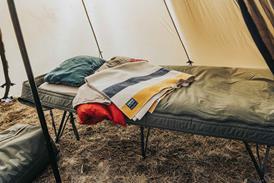
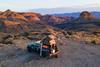
The SkyPeak HD set the tone for the roof. It’s the biggest visual piece in the whole setup, and once it was mounted, the 4Runner felt like it had a true sleep system built into it.
After long days behind the wheel, that changes the way you think about stopping for the night. You’re opening part of the rig, not digging through the back to build camp from scratch.
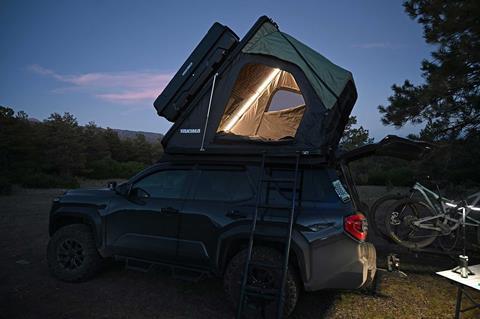
Specs I cared about:
-
Weight: 180 pounds
-
Exterior dimensions: 85 in. long x 58 in. wide x 6.5 in. tall when closed
-
Interior dimensions: 81.5 in. long x 55 in. wide
-
Peak height: 67.5 inches
-
Design: Hardshell clamshell wedge with an expansion pop-out
-
Crossbar compatibility: Works with the SkyPeak HD Crossbar Kit
After a few nights, I stopped thinking about the tent as the new thing on the roof. It became routine. Open it, climb in, close it in the morning, and move on. That sounds almost too simple to write down, but that’s exactly what I want from a rooftop tent when I’m using it night after night.
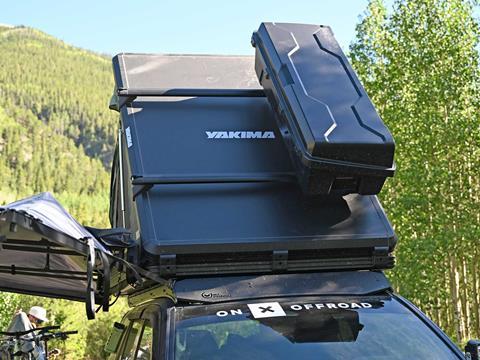
The hardshell design kept the process clean, and the low, closed profile kept it from feeling like a giant box on top of the truck. The crossbar compatibility added another layer to the system, too.
With the SkyPeak HD Crossbar Kit in place, the tent became part of the larger roof layout and gave the DeepSpace 10 a clean place to live.
Yakima OverNOut 180 Awning: Shelter at Camp
An awning can go one of two ways. You either use it all the time, or you leave it zipped up because the effort never feels worth it. The OverNOut 180 landed in the first camp for me.
Once the 4Runner stopped, it gave the side of the rig a more usable footprint without making the process feel like another chore.
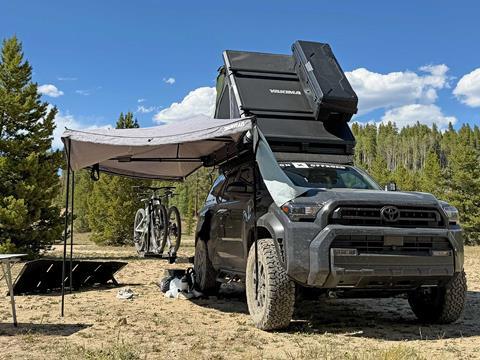
The useful specs:
-
Coverage: 94 square feet
-
Weight: 46 pounds
-
Design: Freestanding 180-degree awning
-
Mounting: Includes T-slot L brackets for Yakima HD Bar, JetStream, LockNLoad Platform, and other standard T-slot crossbars
-
Weather support: Legs and lines are included when conditions call for more stability
The obvious win is shade. The bigger win is how quickly the awning makes the area around the vehicle feel livable. Pull in, open it up, and the 4Runner has a covered side of camp without a lot of messing around.
If conditions stayed calm, I kept it simple. If the weather started acting up, the included legs and lines were there. It also avoided the awkward bracket situation that can show up when awnings and roof setups don’t play nicely together.
The OverNOut mounted cleanly to the roof setup and stayed easy to use, which is exactly how an awning earns its keep.
Yakima DeepSpace 10 Cargo Box: Overhead Storage That Earns Its Place
Storage gets personal fast in a 4Runner. You can have drawers, bins, bags, and a fridge, then still wonder where the last few awkward items are supposed to go.
The DeepSpace 10 helps by moving some of that overflow above the cabin without making the main cargo area work harder.
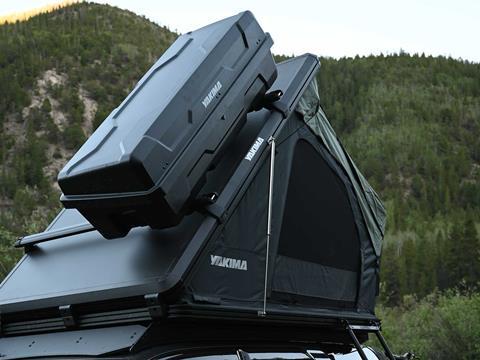
A few numbers worth knowing:
-
Storage capacity: 10 cubic feet
-
Weight: 30.2 pounds
-
Dimensions: 60 in. long x 23 in. wide x 16 in. tall
-
Load rating: 100 pounds
-
Security: SKS lock included
-
Mounting: Requires bed-mounted crossbars or top-of-vehicle crossbars
The wide opening made the box easy to load, which sounds minor until you’re packing the same rig over and over again. Smaller gear had a dedicated place to go, and the back of the 4Runner stayed cleaner. Less digging around at camp is always a win.
This is also where the Yakima system started to feel more connected. The DeepSpace 10 mounted to the SkyPeak HD crossbars, so it didn’t require another roof workaround. The tent wasn’t just taking up space up top. It supported a cleaner storage layout, making the whole build easier to manage.
Yakima StepUp Swing 2 Bike Rack: Carrying Bikes Without Losing Rear Access
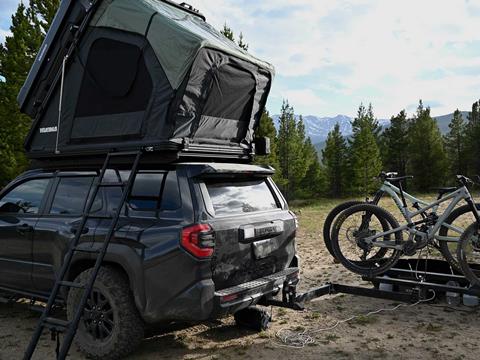
The StepUp Swing 2 showed its value in the least glamorous moments. I’m talking about the times when you need something from the back of the 4Runner, and there are two bikes sitting between you and the hatch.
A normal hitch rack can carry bikes just fine, then become a wall the second you need to get into the vehicle.
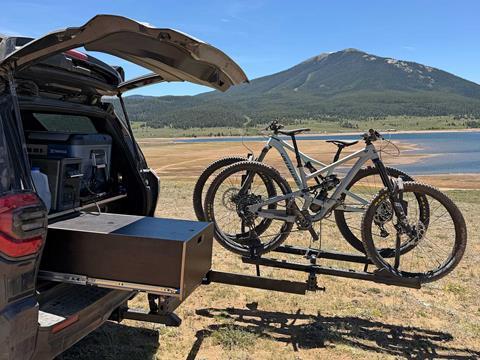
Specs that matter here:
-
Bike capacity: Two bikes
-
Weight rating: Up to 65 pounds per bike
-
Rack weight: 70 pounds
-
Hitch fit: 2-inch receiver
-
Wheel fit: 16-inch to 29-inch/700c wheels
-
Tire clearance: Up to 4.5 inches wide
-
Access: Integrated swing-away design for rear vehicle access
The swing-away function is the whole point. With bikes loaded, I could still get into the rear of the 4Runner without pulling everything off first. That kept the rack from feeling like a punishment every time I needed a tool, a bag, or something from the drawers.
It’s a substantial piece of gear, and you know it’s there when you install it or walk around the rear of the rig. I was fine with that tradeoff because it solved a real daily-use issue.
For a bike-heavy overland setup, carrying bikes is only part of the value. Keeping the vehicle usable with those bikes loaded is the part that makes the rack worth talking about.
What the Full, One-Brand Build Got Right
The biggest takeaway came from how little the setup fought itself once everything was mounted. The cargo box fit cleanly on the RTT crossbars.
The awning gave the parked rig usable shelter. The bike rack kept the rear of the 4Runner from turning into a locked door with bikes hanging off it.

A single-brand setup doesn’t remove the need to think through weight, spacing, or how you actually use the vehicle. You still have to plan the build around your own trips.
What Yakima gave this 4Runner was a cleaner starting point. The pieces had room to do their part without turning the rig into a pile of workarounds.
Plenty of great mixed-brand builds come together one part at a time. After running this setup, I understand the appeal of keeping the main pieces under one roof. The 4Runner stayed cleaner, the gear had clear reasons for being there, and the whole thing felt easier to live with once it was in use.
Access More Great Stories!
For more informative articles like this, consider subscribing to OVR Magazine in print or digital versions here. You can also find the print edition of OVR at your local newsstand by using our Magazine Finder.


No comments yet