




There’s no universal answer to the question of trail tire pressure. Vehicle weight, tire construction, terrain type, sidewall height, and wheel width all play critical roles in determining how low you can safely go. From rock crawling at 12 psi to floating across sand dunes at 2 psi, understanding these variables will help you optimize traction and ride quality without risking a lost bead or damaged tire.
Determining the Right Off-Road Tire Pressure for Your Vehicle
One of the most common questions we hear is “What tire pressure should I run off-road?” Understanding proper off-road tire pressure requires considering multiple factors. There is not a one-size-fits-all answer.
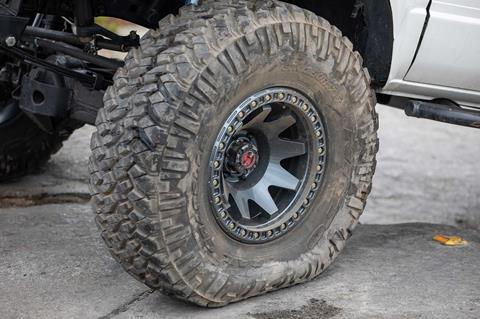
Key factors include vehicle weight, tire construction, terrain type, tire width, sidewall height, and wheel width—all of which determine your minimum safe pressure. Keep reading to learn how these factors will assist you in determining the best tire pressure to run on the trail.
Benefits of Airing Down: Traction and Ride Quality Explained
Airing down your tires for off-road driving delivers two primary benefits: enhanced traction and improved ride comfort. Lowering your tire pressure on the trail allows the tire to conform to the terrain, providing increased traction and improving ride quality. In essence, the tire’s sidewall is part of your suspension system.
Many people are hesitant to air down though for fear of having the tire come off the wheel. Modern wheels have a “bead,” or bump, behind the tire that, along with the air pressure in the tire, keeps the tire on the wheel.
Losing a bead is uncommon, but when it does happen you need to stop driving immediately and reseat the tire or you risk damaging both the tire and the wheel. Another concern, particularly at higher speeds off road, is a pinch flat. This is where the tire gets cut by the rim when it strikes a large obstacle at speed.
Beadlock Wheels: When You Need Them for Extreme Airing Down
Beadlock wheels are essential for extreme off-road tire pressure reduction, particularly when running single-digit PSI. If you are running single digit air pressure on the trail, then beadlocks are for you.
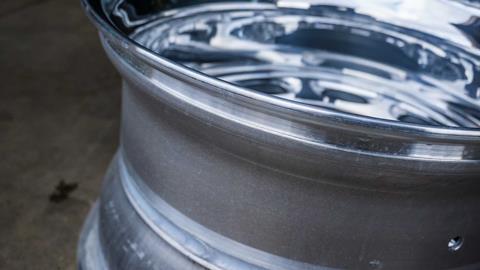
These work by physically clamping the bead of the tire between the wheel and the ring. They typically only bolt the outer bead, although some wheels such as Hutchinson Rock Monsters keep both the inner and outer bead in place.
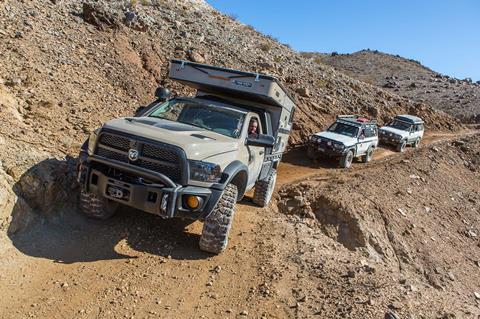
There are downsides to beadlocks though that are not often discussed. They are more expensive and heavier than traditional wheels, and all of those bolts require regular maintenance.
You can still air down your tires on the trail though even if you do not have beadlocks, particularly if using a wheel like Method’s Trail Series with Bead Grip.
Beyond beadlocks, your wheel and tire dimensions significantly impact how low you can safely air down.
How Rim Width Affects Minimum Tire Pressure
The larger the sidewall a tire has, the more discretion you have regarding wheel width relative to tire width. Consider that an LT245/70R17 Nitto Terra Grappler G3, with a sidewall just under seven inches tall, has a recommended rim width of 6.5-8 inches, only a 1 1/2-inch range.
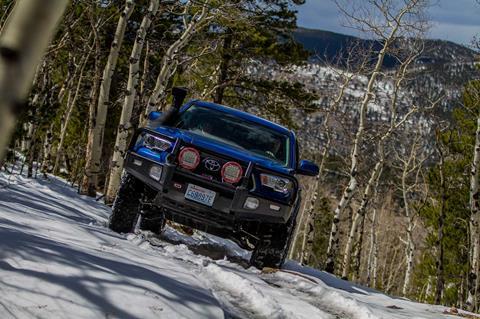
By comparison, the same tire model in a 37x12.50R17LT, with a ten-inch-tall sidewall, has a recommended rim width of 8-10.5 inches, a 2 1/2-inch range.
We recommending erring on the narrow side when selecting wheels, as this increases the pressure in the bead area and allows lower air pressure to be run on the trail without the risk of losing a bead.
The tradeoff is that at normal inflation pressures on the street, a tire mounted on a narrow wheel can crown and wear out the center of the tread prematurely if it is over inflated.
| Tire Pressure Chart | |||
|---|---|---|---|
| Vehicle Type | Street PSI | Trail PSI | Extreme PSI |
| Light SUV (4,000 lbs) | 30-40 | 15-18 | 12-15 |
| Mid-size Truck (5,500 lbs) | 35-45 | 18-22 | 15-18 |
| Heavy-duty Truck (8,000+ lbs) | 40-60 | 30-35 | 25-30 |
*Use this chart for general reference. Your application may vary.
Matching Tire Load Rating to Vehicle Weight for Safe Airing Down
Tires with higher load ratings can carry more weight, but they do so through stiffer construction. For instance, BFGoodrich makes the All-Terrain KO2 in a LT265/70R17 rated to carry 2470 pounds at 50 psi (Load Range C), and also the same size that can carry 3195 pounds at 80 psi (Load Range E).
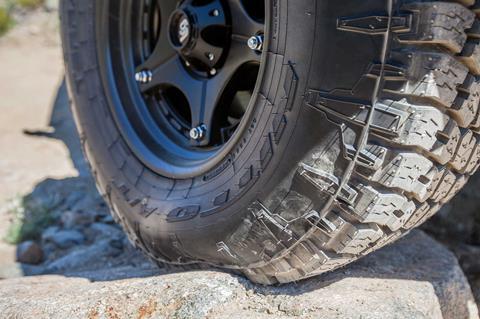
The higher rated tire also weighs eight pounds more (45 pounds versus 53 pounds). Often, the tire you want to run is only available in one load range for a given size, so whether you want to run 37-inch Toyo Open Country M/Ts on your Super Duty or your Samurai they have the same construction and load rating.
A tire with a lower weight rating will typically have a more pliable sidewall that better conforms to terrain without the risk of the tire coming off the rim. The tradeoff is that those pliable sidewalls generate a lot of heat under heavy vehicles like a fully loaded Super Duty.
Once you understand your tire’s capabilities and your vehicle’s weight, terrain becomes the determining factor for specific pressure settings.
Terrain-Specific Tire Pressure: Sand, Rock, and Snow
Deep Sand and Snow: Ultra-Low Pressure (2-8 PSI)
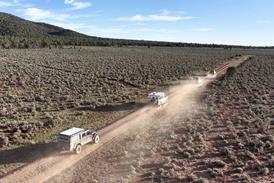
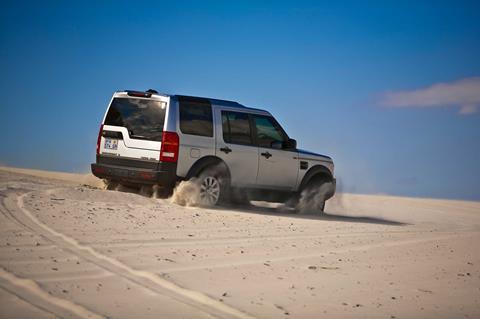
One of the biggest factors in selecting the right air pressure is the terrain you encounter. In deep snow and soft sand, we have run as low as 2 psi for a wide footprint to reduce our contact pressure and float on top of the soft surface.
These situations require beadlock wheels, particularly if you are traveling at high speed and carving through the terrain, which can try to peal the tire off the rim.
Rock Crawling: Moderate Low Pressure (12-18 PSI)
In the rocks, we typically air down to around 12 psi on our 4,700-pound Jeep. At these pressures we have never had an issue losing a bead on the Jeep when running a 37x12.5 tire on a 17x8.5 wheel, even without beadlock wheels.
Washboard and Gravel Roads: Mild Reduction (20-30 PSI)
On washboard, corregated and gravel terrain, we find that tire pressure between 20 to 30 psi works out for a smoother ride.
Essential Equipment for Deflating and Inflating Tires on the Trail
There are a variety of tools on the market that allow you to release air out of your tires and air them back up after you return to pavement.
Manual Deflators vs. Automatic Systems
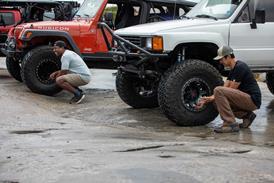
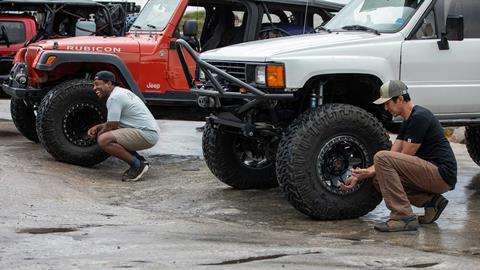
Lower priced deflators typically just push down the valve core and are used in conjunction with a tire gauge. The upside is that these are inexpensive and do not take up much room in your vehicle.
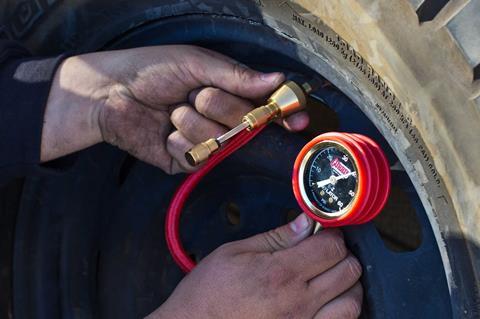
Companies including ARB make deflators that remove the valve core from the wheel and are much faster, but you only deflate one tire at a time so the overall time is comparable. These deflators also have an integrated air gauge to let you see exactly what air pressure you are running.
Airing up to the recommended inflation pressure is critical when you get back to the pavement. Low air pressure not only results in poor fuel economy, but all that rolling resistance can cause your tires to overheat to the point of failure if the pressure is too low and the speeds are too high for a sustained period.
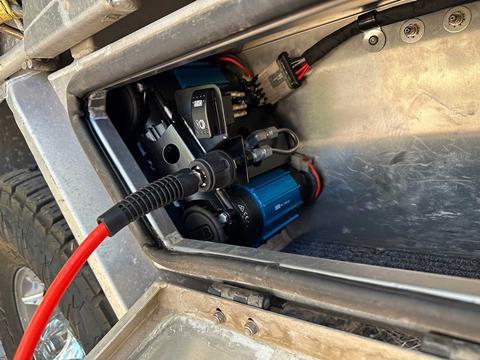
Choosing the Right Air Compressor for Your Needs
Options range from portable compressors to fixed compressors to CO2 tanks depending on your budget and space constraints. Prices vary widely, with more expensive options typically being faster. There are even automatic options available that pump or deflate your tires to the desired air pressure at the push of a button.
This is a textbook case of you get what you pay for. Compare the Cubic Feet per Minute (CFM) and duty cycle of compressors when looking at different alternatives to get an idea of how fast they will fill your tires.
Quick Reference: Starting Pressures for Common Off-Road Vehicles
Lowering your tire pressure on the trail is a great way to improve ride quality and increase traction. While there are a variety of factors in just how low of pressure you can run before you risk damaging your tire and/or wheel, or losing a tire bead, you can still run significantly less air pressure than you normally do on the street with minimal risk.
We recommend starting with half of your normal street pressure for use on the trail. So, if you have a Tacoma that normal runs 30 psi, you can safely air down to 15 psi. But if you have a fully kitted Super Duty that runs 60 psi on the street, we recommend airing down to 30 psi on the trail.
Safety Warning:
- Always reinflate before returning to pavement
- Check tire pressure with accurate gauge
- Understand your vehicle’s specific requirements
Access More Great Stories!
This article originally appeared in OVR Issue 12. For more informative articles like this, consider subscribing to OVR Magazine in print or digital versions here. You can also find the print edition of OVR at your local newsstand by using our Magazine Finder.

No comments yet